MEMBRANE FILTRATION (NF, RO, etc...)
Pure Performance, Long-Term Efficiency.
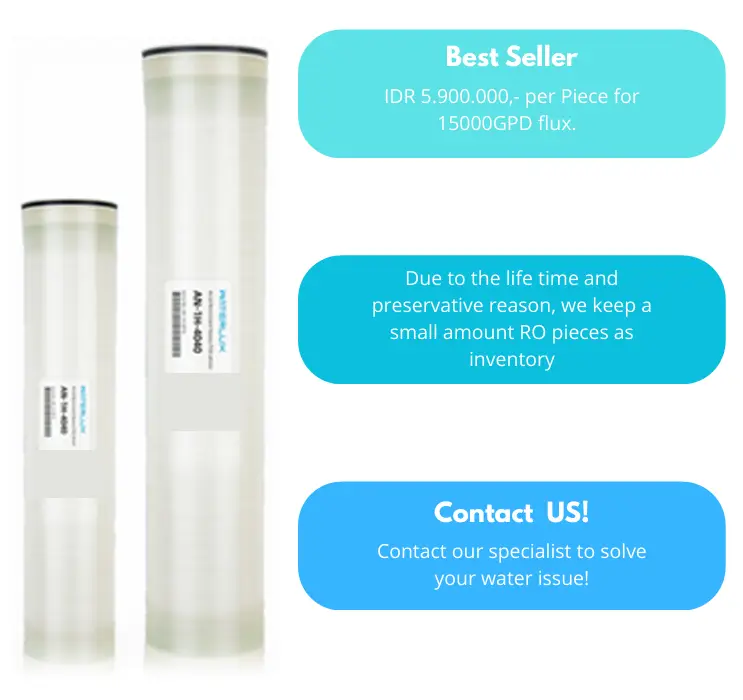
RTL-BWHF8040-400/31
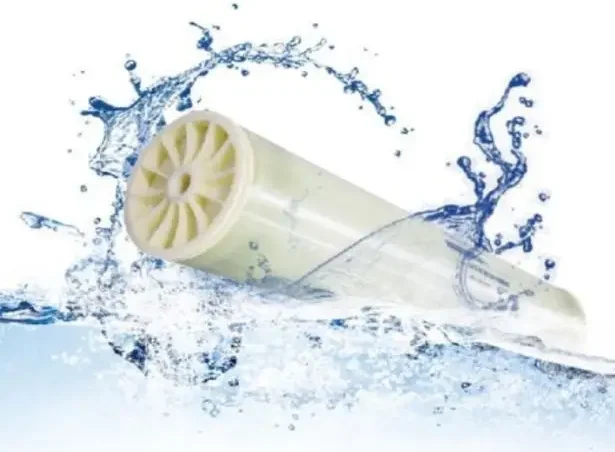
High Flux Brackish Water Reverse Osmosis Membrane Element
FEATURES: RTL BWHF8040-400/31 with effective area 3 400ft², permeter flow 56.7m /d(15000GPD) under standard testing condition. Compared with RTL-BW8040-400/31 , RTL-BWHF8040 400/31 with excellent permeate flow.
SPESIFICATIONS:
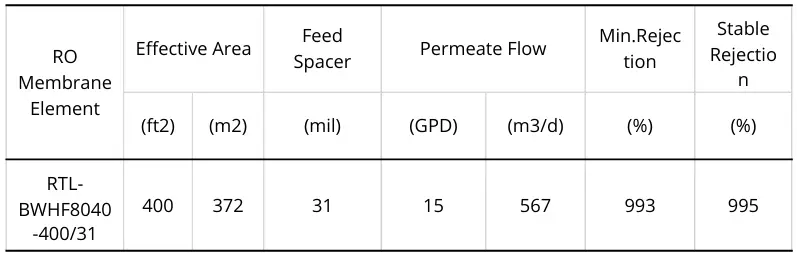
The Above values are based on the following test conditions: 2,000 ppm NaCl, 225 psi (15.5 bar), 77°F (25°C), pH = 8, 15 % recovery; The performance parameters of the membrane elements were measured after 24 hours of steady state operation, with a range of ±15 % of the permeate flow; Effective membrane area is guaranteed to be ±3%; RTL reserves the right to change the performance parameters of the product without prior notice.
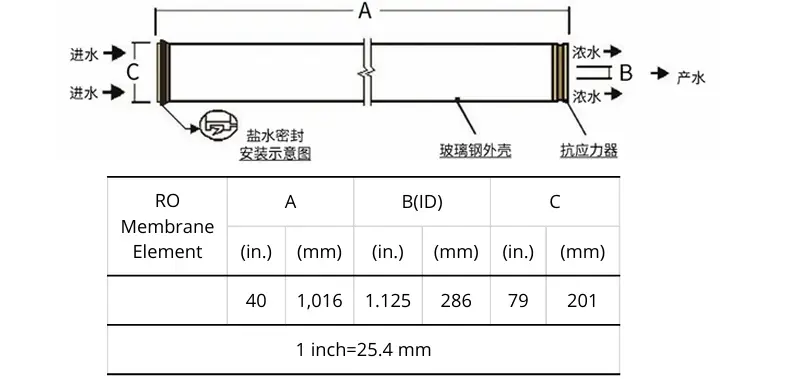
- Refer to the《 RTL Reverse Osmosis Membrane Design Guidelines 》when designing a multi-element system and follow the appropriate recovery limits based on the type of feed water;
- This element fits into a pressure vessel with a nominal inside diameter of 8.00 inches (203mm).
RTL-SWURG2-8040-400
High Flux Brackish Water Reverse Osmosis Membrane Element
FEATURES : RXHL Technology offers a wide range of superior seawater desalination reverse osmosis membrane elements to save the investment and operating costs of seawater desalination systems.RXHL’s products combine excellent membrane performance with fully automated, high-precision manufacturing processes, resulting in systems with significantly higher water permeate flow, stable performance and durability.
- The RTL-SWXLERG2-8040 400 membrane element greatly improves the water permeate flow, which further reduces thecost of the desalination system.
- It is ideal select when designing a two-stage desalination or high TDS brackish water system.
- Selection of this element in a segmented seawater desalination system will not weaken the performance of the downstream section.Systems designed with this element can operate at lower energy consumption, thus optimising investment and operating costs
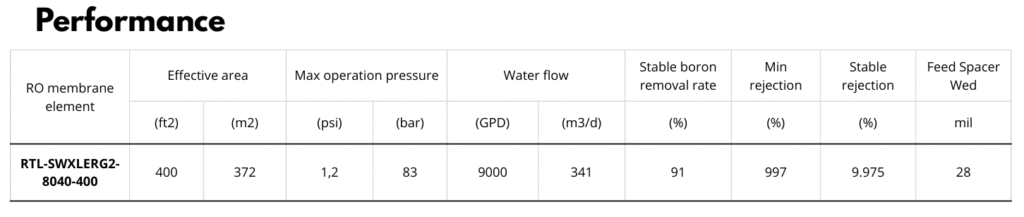
The above values are based on the following test conditions: 32,000 ppm NaCl, 800 psi (55 bar), 77°F (25°C), pH = 8, 8 % recovery; The performance parameters of the membrane elements were measured after 24 hours of steady state operation, with a range of ±15 % of the permeate flow; Effective membrane area is guaranteed to be ±3%; RTL reserves the right to change the performance parameters of the product without prior notice.
- Refer to the《 RTL Reverse Osmosis Membrane Design Guidelines 》when designing a multi-element system and follow the appropriate recovery limits based on the type of water being fed;
- This element fits into a pressure vessel with a nominal inside diameter of 8.00 inches (203 mm).
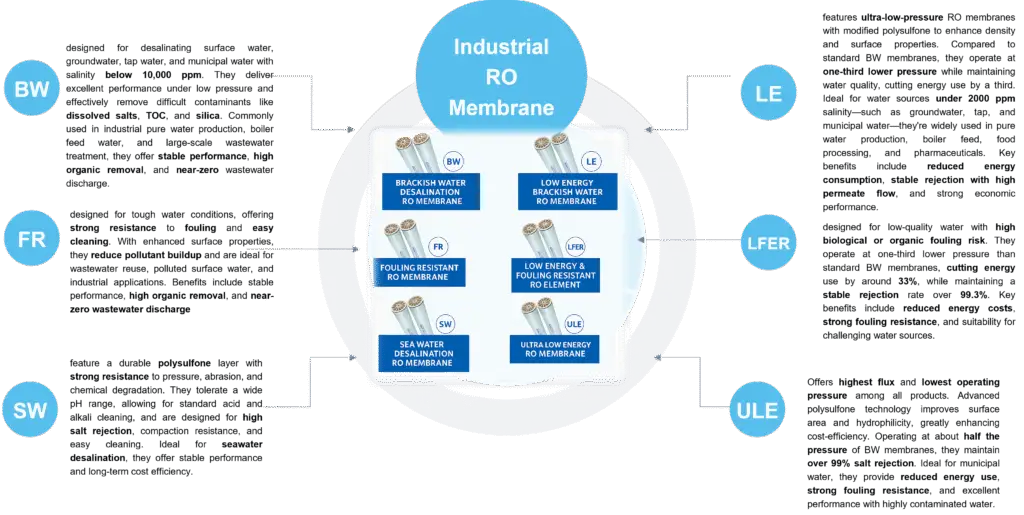
TYPES OF MEMBRANE
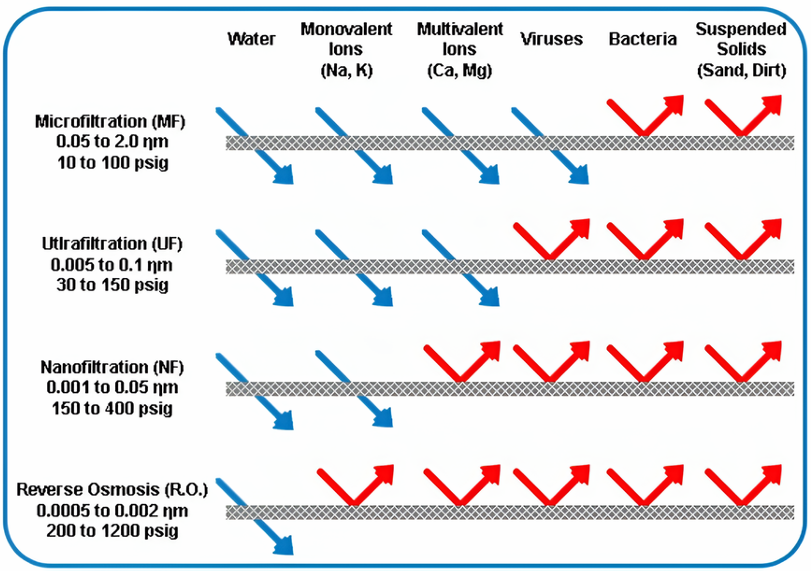
In Microfiltration (MF), the membrane has a relatively large pore size (0.05–2.0 µm) with low operating pressure (10–100 psig). MF can filter out large particles such as suspended solids (sand, dirt) and bacteria, but it still allows viruses and dissolved ions, both monovalent (Na, K) and multivalent (Ca, Mg), to pass through.
Next, Ultrafiltration (UF) with a smaller pore size (0.005 0.1 µm) and pressure of 30–150 psig can filter suspended solids, bacteria, and most viruses. However, UF is still not effective in removing dissolved ions, whether monovalent or multivalent.
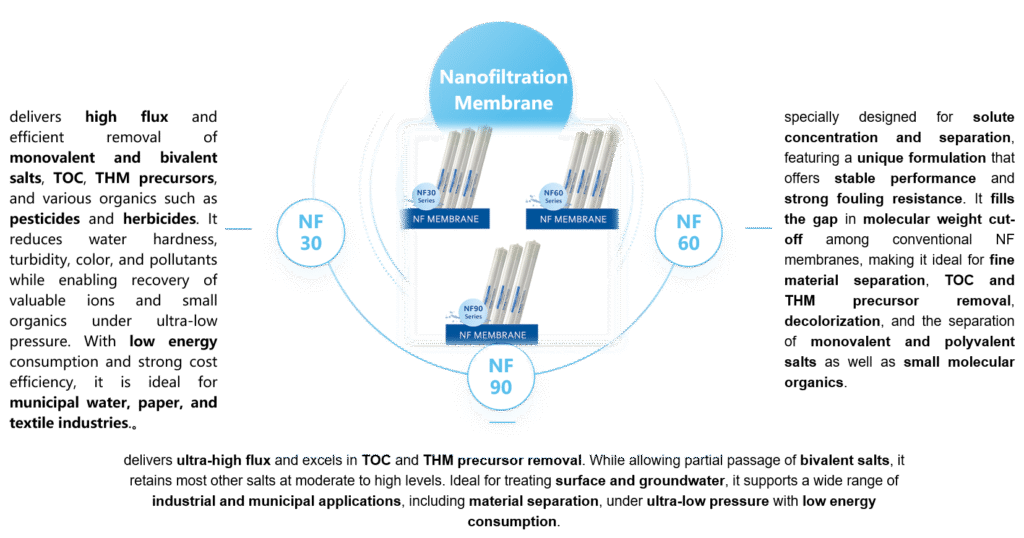
Then, Nanofiltration (NF) has an even finer pore size (0.001–0.05 µm) with an operating pressure of 150–400 psig. NF can filter bacteria, viruses, and most multivalent ions such as calcium and magnesium, but it still allows monovalent ions like sodium and potassium to pass through.
Finally, Reverse Osmosis (RO) with the smallest pore size (0.0005–0.002 µm) and high pressure (200–1200 psig) can filter almost all contaminants, including suspended solids, bacteria, viruses, multivalent ions, and even monovalent ions. Only water molecules are able to pass through the RO membrane, resulting in the highest level of water purity.
In short, the smaller the pore size and the higher the pressure used, the more types of contaminants can be filtered from the water.
Another conclusion we can draw from the explanation above is that Nanofiltration (NF) is a relatively new water filtration technology compared to microfiltration, ultrafiltration, and reverse osmosis. NF uses membranes with very small pore sizes (0.001–0.05 µm) and operates at medium pressure (150–400 psig). The main advantage of NF is its ability to filter bacteria, viruses, suspended solids, and multivalent ions such as calcium (Ca) and magnesium (Mg), which are usually the cause of hard water. However, unlike reverse osmosis, which removes almost all mineral content, NF can still allow some monovalent ions such as sodium (Na) and potassium (K) to pass through. Therefore, NF-treated water still contains a small amount of natural minerals that are actually beneficial for the human body, making this technology more suitable for daily drinking water needs.